
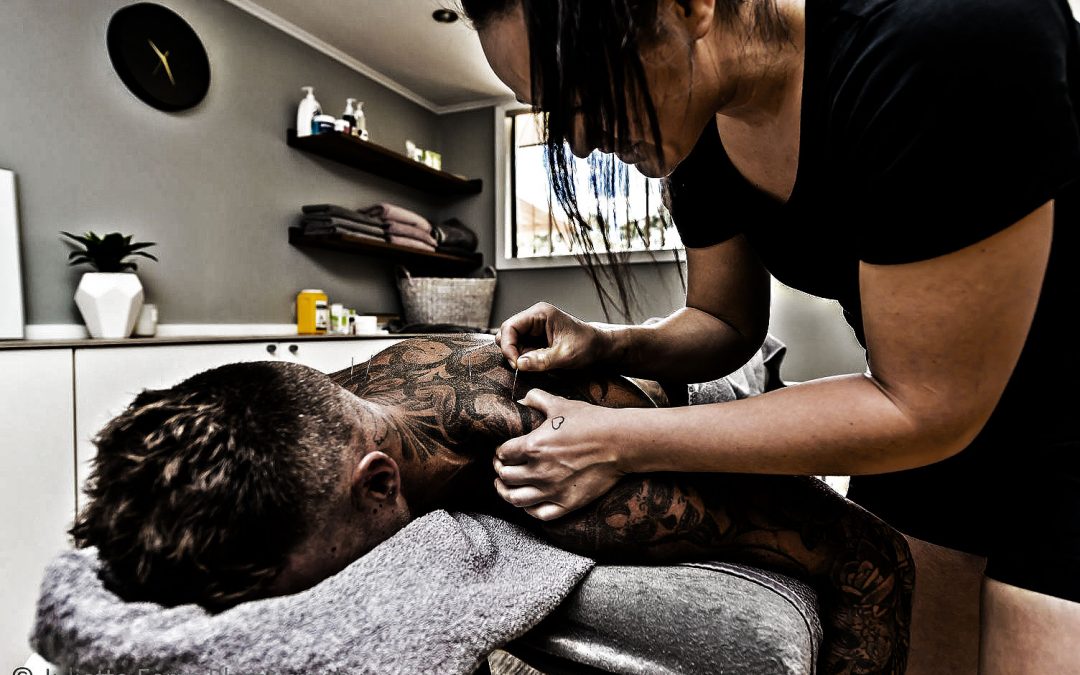
Ah, Dry Needling …the absolute must-have in every therapist’s bag of tricks.
But as a client, do you know what this technique is or the benefits of it?
It baffles me that practitioners still don’t explain this technique to clients. I mean, you take a needle and stab someone with it, descend deep into the muscle (hopefully missing organs, arteries, veins, bones *wink wink* ) begin pistoning said needle, in the hope to get a twitch response from the muscle which elicits PAIN in the client…
I mean…come on, ya gotta admit that sounds kinda tad psychopathic! Amirite?
Well, fear not, my beautiful peeps. I am here to explain everything you need to know about dry needling and quite possibly some things that you can use next time ya wanna sound smart as hell to ya mates!
Pilates? Oh, Hell NO, I thought you said PIE and LATTES!
So, the first thing to note is, these are not your “jab you in the vein and suck your life force out of you” needles. (aka, hypodermic needles)
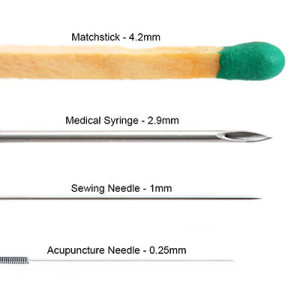
They are acupuncture needles. With a slight difference.
But let’s just note the difference between acupuncture and dry needling.
Acupuncture is the use of needles inserted just below the surface of the skin in relation to energy meridians (the idea is that the use of the needles will open up and unblock these pathways).
Dry needling is the use of acupuncture needles to incite a twitch response at the deep layer of the muscle in question.
So why would you wanna have your muscles jabbed to create a spasm in an already contracted muscle? Good question Debbie!
Whilst the jury is still out on what the actual mechanism is of how it works; the literature suggests a few theories.
- Stimulation of endogenous opioids (releasing of pain managers naturally occurring in the body)
- Breaking the trigger point cycle of continuous contraction and pain
- The act of “winding” the needle which allows the fascia to bind to it, is thought to increase blood flow to the area
“If we’re not meant to have midnight snacks, THEN WHY is there a light in the fridge?”
Right, so before we move on, I want to point out that as a client and ya know, a human being with a brain and feelings and all.
YOU DO NOT NEED TO AGREE TO have DRY NEEDLING DONE IF YOU DON’T WANT.
(just because there is a light don’t mean you gotta binge Debbie)
Dry needling is not a superior form of treatment than say, massage alone.
There still isn’t enough research out there that supports that claim.
Also, as a practitioner, I do not need to chase after that twitch response that occurs.
That twitching can be quite uncomfortable and has been proven to increase the pain felt post-treatment for a few hours.
So why bother? Because the technique has been shown to have a greater length of reduced pain and increased movement for longer periods POST treatment than massage alone!
More bang for your buck!
“I’m not lazy, I am just in Energy-saving mode”
Righto, so now that I have convinced you to give needling a shot (just entertain me here)
The things you can expect during and post-treatment.
- The needle won’t hurt upon insertion. (99.9% of the time)
- For a vast majority of practitioners (including physios, chiros, and osteos) they will be chasing a twitch response so the more relaxed you are the less of a shock it can be
- Dry needling CAN hurt. There is a small percentage that doesn’t have an issue.
- A general rule, the more tension, the greater the LTR (localized twitch response), the more tender you maybe after
- You will feel tender post-treatment. To combat this, you can heat pack the area, take anti-inflammatories but most of all, MOVE. It only has to be small, but movement will help to dissipate the ache you will be feeling.
Don’t be lazy like Debbie
Also, book in your needling session with me. I promise to be gentle
*wink wink*
Recent Comments